


- Actualités
- Urgence Amazonie
- Belo Monte
- Un projet qui méprise les Droits de l'Homme
- Une illégalité dénoncée au Brésil et au-delà
- L'ONU à la rescousse
- Climat de violence pour le début des travaux
- La France et l'Europe, partenaires de la honte
- Le rôle des banques
- Le prétexte de l'énergie, la réalité des dommages
- Le cheval de Troie de l'industrie minière
- STOP BELO MONTE : pétition du Cacique RAONI
- Contact
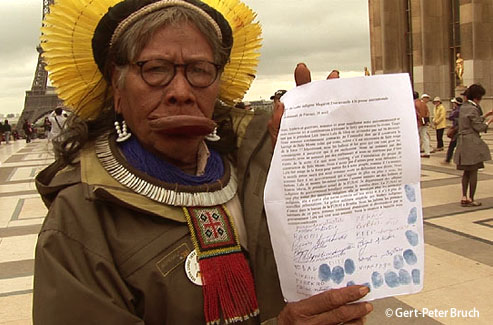
Belo Monte :
pétition du Cacique Raoni
pétition du Cacique Raoni
A ce jour 502905 signatures.


Actualités
INFORMATIONS AUX VISITEURS DU SITE RAONI.COM
Depuis juin 2017, raoni.com n'est plus actualisé. Il reste cependant en ligne car son contenu, historique, est d'intérêt général pour le grand public, les chercheurs et les médias.
Le site raoni.com a été créé en 2010 sous le nom raoni.fr, en accord avec le cacique Raoni Metuktire pour soutenir sa lutte en faveur de la forêt amazonienne.
En particulier, ce site abrite la pétition internationale du cacique Raoni contre le barrage de Belo Monte, qui a permis un éveil des consciences planétaire sur le danger des infrastructures hydroélectriques en Amazonie, prétendument durables mais construites en réalité au détriment des peuples autochtones, des populations traditionnelles et de la biodiversité, avec la participation d'entreprises européennes ou étrangères.
***
ALLIANCE DES GARDIENS DE MÈRE NATURE : nouvelle brochure de présentation, avant la grande assemblée d'octobre 2017
L’Alliance des Gardiens de Mère Nature, une entité internationale sans frontières, se conçoit comme une voie d’espoir, une façon concrète de démontrer au monde entier que les indigènes et leurs alliés ne constituent pas un problème mais qu’ils sont, au contraire, des alliés indispensables pour trouver les solutions qui garantissent la transition de notre modèle de développement en respectant les droits humains et l’environnement. L’Alliance se veut être comme un outil actif et agissant, à la fois générateur et catalyseur de projets, de propositions et d’alternatives concrètes pour la préservation de l’environnement, du climat et des droits humains, quels qu’ils soient.
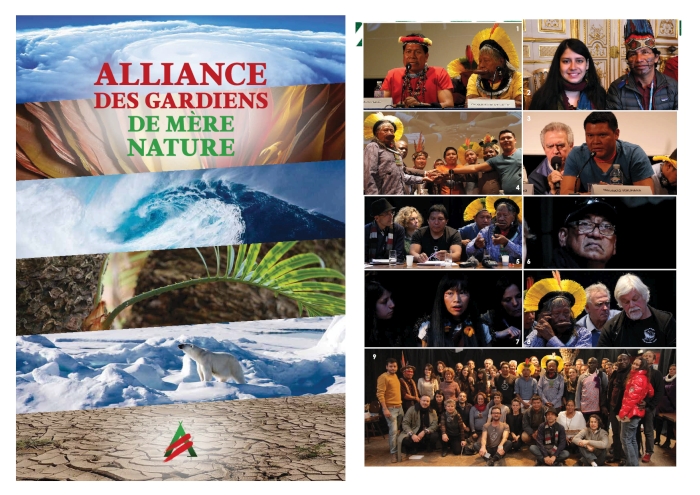 Télégargez maintenant la présentation complète
***
SCANDALE DE CORRUPTION D’ETAT AU BARRAGE DE BELO MONTE : Le montage de l'ancienne Première Ministre Erenice Guerra

Source : Istoé
Ou comment la ministre de la Casa Civil (Première Ministre) et fidèle écuyère ?de Dilma a opéré à Belo Monte, aux côtés de Palocci et Silas Rondeau, des pots de vins de 45 millions de reais (12 millions €) pour alimenter les campagnes électorales de 2010 et 2014
Par Débora Bergamasco
.
***
BRÉSIL : LA PRÉSIDENTE DILMA ROUSSEFF MET SON VETO AU PROJET DE LOI EN FAVEUR DE L'UTILISATION DES LANGUES AUTOCHTONES DANS LES ÉCOLES ET LES UNIVERSITÉS
Source : socioambiantal.org
Le projet a été approuvé par le Congrès en Novembre 2015, et permet l'utilisation des langues autochtones et des processus différenciés d'évaluation de l'éducation à tous les niveaux de l'enseignement. L'usage du droit de veto du gouvernement est survenu en Décembre et inquiète les dirigeants autochtones et les experts.
***
ZAPPING COP 21 : le Cacique Raoni et l'Alliance des Gardiens de Mère Nature à la télévision française
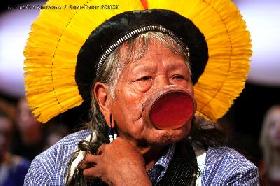
Le Cacique Raoni Metuktire et sa délégation, constituée de 3 jeunes indigènes et de membres de Planète Amazone, ont participé à un nombre important d'événements pendant la COP 21, afin de présenter et lancer l'Alliance des Gardiens de Mère Nature, qui a abouti à 17 propositions remises à Ban Ki Moon et François Hollande. Il a trouvé le temps d'être accueilli par 4 chaines de télévision différentes, auprès d'amis tels que Paul Watson (Sea Shepherd), Pierre Richard, Valérie Cabanes (End Ecocide on Earth), Gert-Peter Bruch (Planète Amazone) et du jeune leader Kanato Yawalapiti. Retrouvez sur cette page, ses apapritions sur France 2, Canal Plus, TV5 Monde et France 24 en résumé à lire, ou à regarder à nouveau en vidéo.
***
ALLIANCE DES GARDIENS DE MÈRE NATURE : L'AVENTURE CONTINUE, DEMANDEZ LE PROGRAMME !

Téléchargez maintenant la présentation de l'Alliance des Gardiens de Mère Nature
Après un lancement réussi à Paris concrétisé par la remise de 17 propositions pour les générations futures remises à Ban Ki Moon et au Président de la République Française, l'Alliance des Gardiens de Mère Nature, souhaitée par le Cacique Raoni et des chefs autochtones d'Amazonie brésilienne, prépare la phase 2 de son lancement : une réunion historique de chefs et militants de l'environnement venus du monde entier sur le territoire du peuple Kayapo.
***
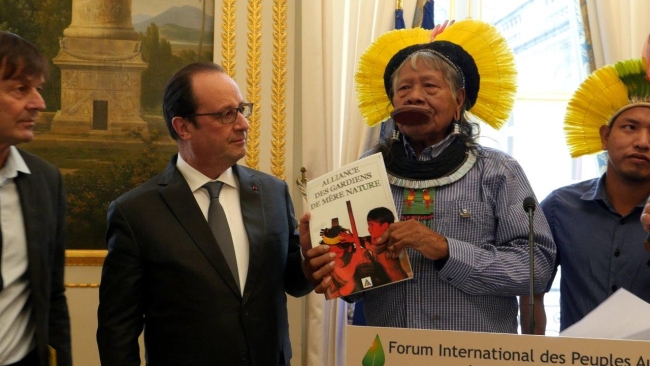
Propositions et recommandations de l’Alliance des Gardiens de Mère Nature aux États et à la communauté internationale pour la préservation du climat et des générations futures
A l’issue de l'Assemblée des Gardiens de Mère Nature qui s’est tenue le 28 novembre à Paris, les représentants autochtones, les personnalités et les organisations présents, venus du monde entier, rappellent que les populations autochtones représentent 370 millions d'individus, regroupés dans plus de 70 pays sur cinq continents. Elles forment plus de 5.000 groupes différents, parlent plus de 4.000 langues dont la plupart risquent de disparaître d'ici à la fin du XXIème siècle.
***
Sommet de l'Alliance des Gardiens de Mère Nature les 1er et 2 décembre 2015
Un cycle exceptionnel de tables rondes réparties sur 2 après-midis, à la mairie du VIe arrondissement de Paris, présidé par le Cacique Raoni.
Ce sommet a pour but de rassembler les représentants autochtones et défenseurs de l'environnement pour aborder, du point de vue des populations les plus fragiles et affectées les thématiques liées aux changements climatiques et à la dégradation des éléments naturels. L'Alliance des Gardiens de Mère Nature jette les bases d'un nouveau rassemblement favorisant la convergence des luttes. Une première Assemblée à Paris, le 28 novembre, a participé à l'élaboration d'un texte fondateur de propositions destinés aux dirigeants. Organisé par Planète Amazone, en partenariat avec l'Instituto Raoni, End Ecocide on Earth, ATIX, Nature Rights, Amazon Watch...
Entrée uniquement sur inscription :
http://raoni.com/invitations/2015-12-01_02_sommet_alliance.html
***
Le Cacique Raoni rencontre le député Nilson Leitão, fossoyeur des peuples indigènes du Brésil

Emblème à lui seul de la consternante indécence politique en cours avec les assauts violents envers les droits des peuples indigènes par les textes en délibération actuellement au Brésil, le député Nilson Leitão a toutefois reçu le Cacique Raoni, accompané d'une délégation importante délégation Kayapo, ce mercredi 18 novembre 2015. La scène a été filmée par le cinéaste indigène Kamikia Kisedje.
***
HUILE DE PALME - L’ENFUMAGE DOIT CESSER À PARIS
Communiqué de presse Envol Vert / Planète Amazone / Coeur de forêt
L’Indonésie vient redorer l’image de l’huile de palme alors que l’expansion des cultures entraine actuellement des feux sans précédents. Paris, 2 novembre 2015 à 11h, l’Ambassadeur de l’Indonésie en France vient jeter de l’huile sur le feu en présentant en quoi l’huile de palme est produite durablement en Indonésie. Les ONGs Envol Vert, Coeur de Forêt et Planète Amazone sont offusquées de voir ce gouvernement défendre à Paris, juste avant la COP21, l’image de l’huile de palme alors que les forêts indonésiennes sont brûlées depuis des mois pour être converties en plantations de palmiers à huile provoquant des nuages toxiques de fumée sur toute l’Asie du Sud-est. Nous appelons tous les acteurs concernés à mettre immédiatement en place un plan d’action Zéro Déforestation pour arrêter ce désastre écologique et climatique !
***
Brésil : la Commission de la Chambre des Députés approuve la proposition de l’amendement constitutionnel PEC 215 modifié

Source : Instituto Socioambiantal
En guise de manifestation, des peuples indigènes bloquent 14 autoroutes dans 12 états et des parlementaires indigénistes quittent la session de la commission. Le rapporteur de la proposition de la Commission a proposé au Congrès une procédure de démarcation des terres indigènes similaire à celle des Mesures Provisoires.
Dominée par les ruralistes, la Commission Spéciale qui analyse la proposition d’Amendement de la Constitution (PEC) 215 a approuvé, mardi 27 octobre 2015, l’avis du député Osmar Serraglio (PMDB-PR). Au dernier moment, le parlementaire a changé le texte et modifié la procédure des démarcations des Terres Indigènes (TIs) au Congrès.
En guise de manifestation, des peuples indigènes bloquent 14 autoroutes dans 12 états et des parlementaires indigénistes quittent la session de la commission. Le rapporteur pour avis de la Commission a proposé au Congrès une procédure de démarcation des terres indigènes similaire à celle des Mesures Provisoires.
***
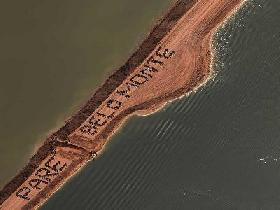
Victoire pour le fleuve Xingu : la licence d'exploitation de Belo Monte refusée
Source : Amazon Watch
Nous (Amazon Watch, ndt) vous récemment fait la demande à la communauté internationale d'exhorter l'agence de protection de l'environnement brésilienne (IBAMA) à rejeter la demande du consortium Norte Energia de la licence d'exploitation pour le complexe de barrages de Belo Monte.
***
Le monde perd un grand gardien des forêts et traditions, adieu à notre ami le grand chef Pirakuman Yawalapiti
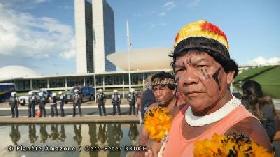
C'est une immense tristesse qui nous étreint au moment d'écrire ces lignes. Pirakuman Yawalapiti était une force de la nature, animée par les esprits de l'Amazonie. Bien qu'il fut d'une autre ethnie, distante de centaines de kilomètres, le Cacique Raoni perd quelqu'un du même sang, qu'il considérait comme son propre fils. Son coeur a cessé de battre alors qu'il se baignait dans le Xingu, ce fleuve menacé par de grands barrages, agressé par les planteurs de soja, pour lequel il a tant lutté. En avril, il avait scellé avec lui et quelques grands chefs la naissance de l'Alliance des Gardiens de Mère-Nature. Sa perte est une tragédie pour la planète en ces heures si sombres. Planète Amazone est en deuil.
***
Valdelice Veron, représentante du peuple Guarani-Kaiowá, compte-rendu de sa visite en France et à l'ONU
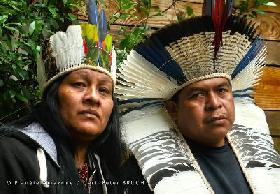
C’est après une rencontre bouleversante avec la représentante indigène Valdelice Veron en 2013 à Brasilia que Planète Amazone s’est engagé à aider à mettre davantage en lumière le drame des Guarani-Kaiowá. Grâce au soutien de Nicolas Hulot qui l’invite au Sommet des Consciences sur notre suggestion, Planète Amazone organise du 20 au 26 juillet 2015 la toute première venue en Europe de Valdelice Veron et de son époux, le chef Natanael Vilharva Caceres. De l’Elysée à l’ONU en passant par l’Assemblée Nationale, nous vous proposons le récapitulatif d'un séjour mémorable.
***
Brésil: Victoria Tauli-Corpuz, Rapporteuse spéciale de l'ONU sur les droits des peuples autochtones, préoccupée par l'expulsion des Guarani Kaiowá
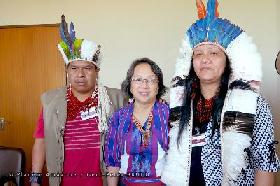
Le 23 juillet 2015, Planète Amazone a organisé une rencontre entre la Raporteuse Spéciale de l'ONU sur le droit des Peuples Autochtones Victoria Tauli-Corpuz et les représentants Guarani-Kaiowá Valdelice Veron et Natanael Vilharva Cáceres. La diplomate avait promis de réagir vite en interpellant directement le gouvernement brésilien sur une situation explosive. Elle a tenu parole.
***
Ruth Buendia, héraut des indigènes
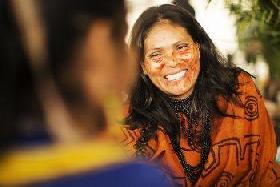
Source : Secours Catholique
Au fil d’un parcours atypique, Ruth Buendia a voué sa vie à la défense de son peuple, les Ashaninkas. Soutenue par le Centre amazonien d’anthropologie et d’application pratique (CAAAP), partenaire du Secours Catholique au Pérou, elle mène son combat avec persévérance.
***
Lettre ouverte des Guarani et Kaiowá à la population brésilienne au gouvernement national et à toute l'humanité
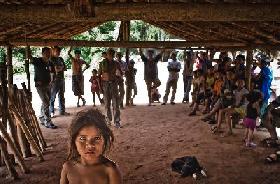
*** Vous aussi, participez à la cyberaction internationale : #IamGuaraniKaiowa, en posant avec ce slogan et en postant votre photo ici ***
Introduction par Gert-Peter Bruch, président de Planète Amazone - 45 000 indigènes victimes de lent génocide en raison de l'accaparement de leurs terres par des grands propriétaires terriens avides et auteurs de nombreux crimes contre l'humanité à leur encontre ont lancé récemment un S.O.S. désespéré, celui de la dernière chance.
***
Valdelice Veron, porte-parole des Guarani-Gaiowá : "pour chaque plein d’éthanol, il y a du sang Guarani qui coule"
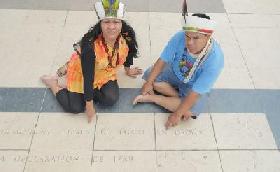
Source : novethic.fr
Les peuples autochtones ne veulent pas être les oubliés de la conférence climatique de Paris (COP 21). Invitée au Sommet des consciences, qui s’est tenu le 21 juillet dans la capitale française, Valdelice Veron, 37 ans, est la porte-parole emblématique du peuple Guarani-Kaiowá, de l’État du Mato Grosso do Sul, au Brésil. Menacée de mort, elle a quitté sa terre natale pour la première fois de sa vie afin de lancer un appel au secours. Elle dénonce l’écocide en cours au nom de la production d’éthanol, pétrole vert du Brésil, qui en est le premier exportateur mondial. En dix ans, 300 indigènes ont été tués en raison des conflits autour des terres. Témoignage.
***
Au Brésil, les biocarburants tâchés par le sang des indiens Guaranis-Kaiowa
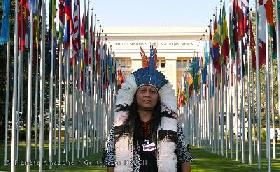
Source : nationalgeographic.fr
Ils ne sont plus que 45 000 dans tout le Brésil. Victimes de la spoliation de leurs terres, les indiens Guarani-Kaiowa luttent pour leur survie. Valdelice Veron et le cacique Natanael Vilharva-Caceres, deux de leurs représentants, étaient à Paris pour dénoncer la lente mort de leur peuple.
***
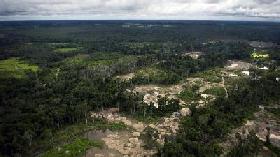
L'Amazonie grignotée par la ruée vers l'or clandestine
Source : lefigaro.fr
C'est l'ensemble de cette forêt tropicale sud-américaine, la plus grande au monde, qui est grignotée en divers endroits, par des sites miniers illégaux.